What macro photography really is
Reproduction ratio and magnification: the 1:1 ratio and beyond, the different scales, and why in macro we do not get closer, we magnify.
What we will learn
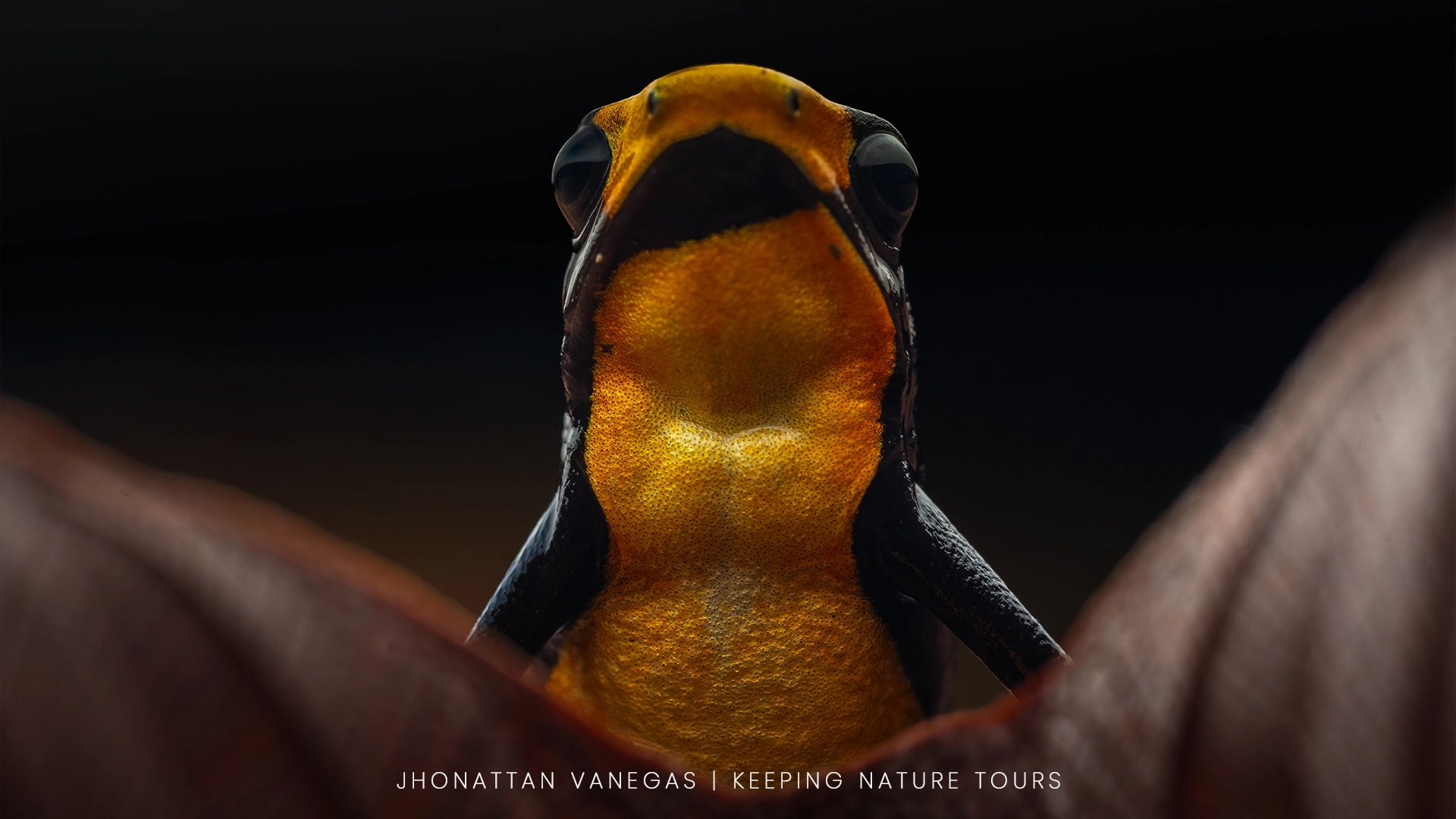
Macro photography lets us step into a world that is often right in front of us and goes unnoticed.
Over four hours we will understand the principles behind a good macro photograph and, above all, how to make conscious decisions when we are in front of a subject.
We will work on six pillars:
Four hours do not replace the experience you build by photographing in the field. What I want to give you in this workshop is a solid foundation so you understand what you are doing, why you are doing it and what you can start practicing on your own. Experience will come later: observing, making mistakes, returning to the field and learning from every encounter.
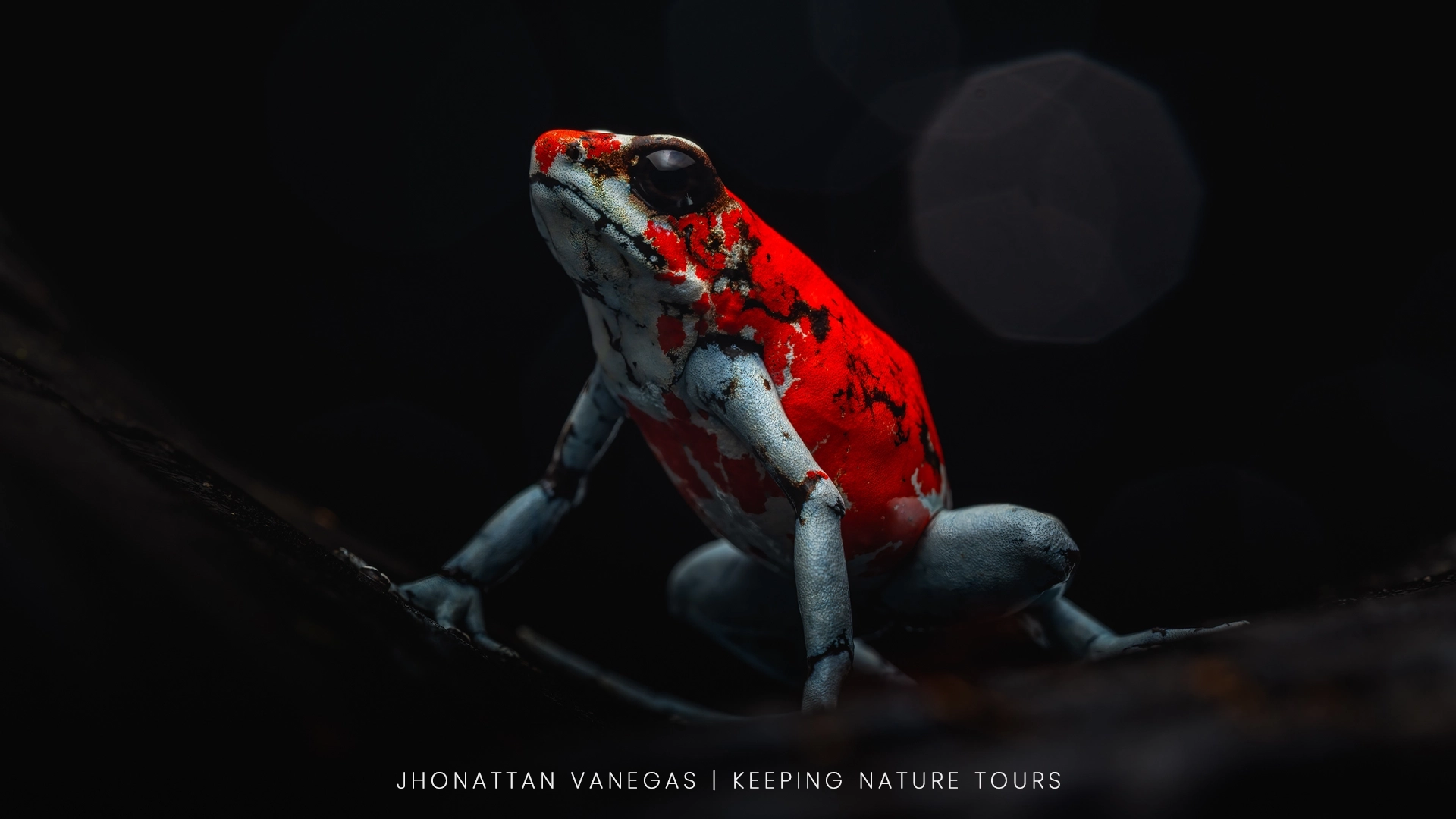
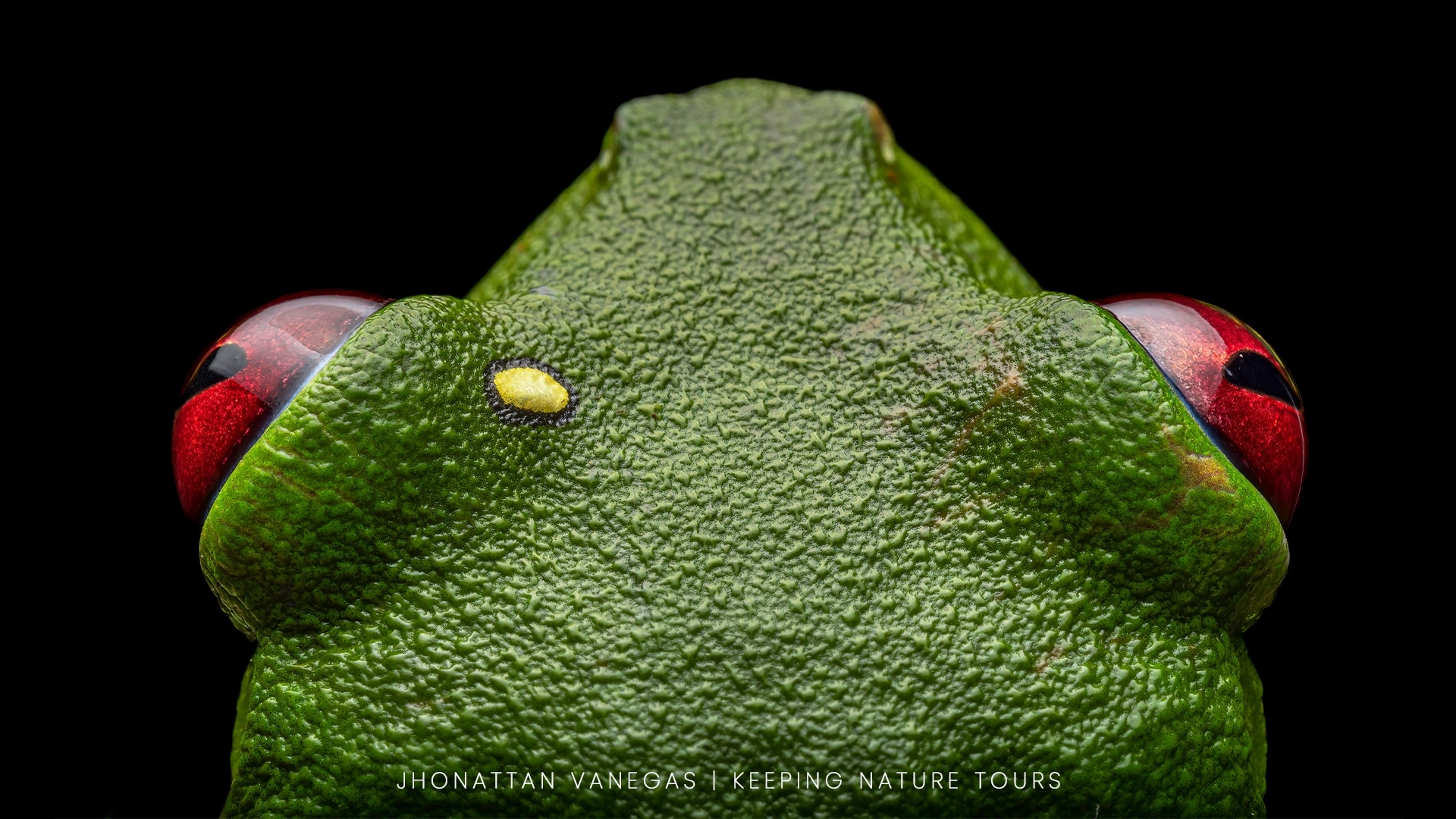
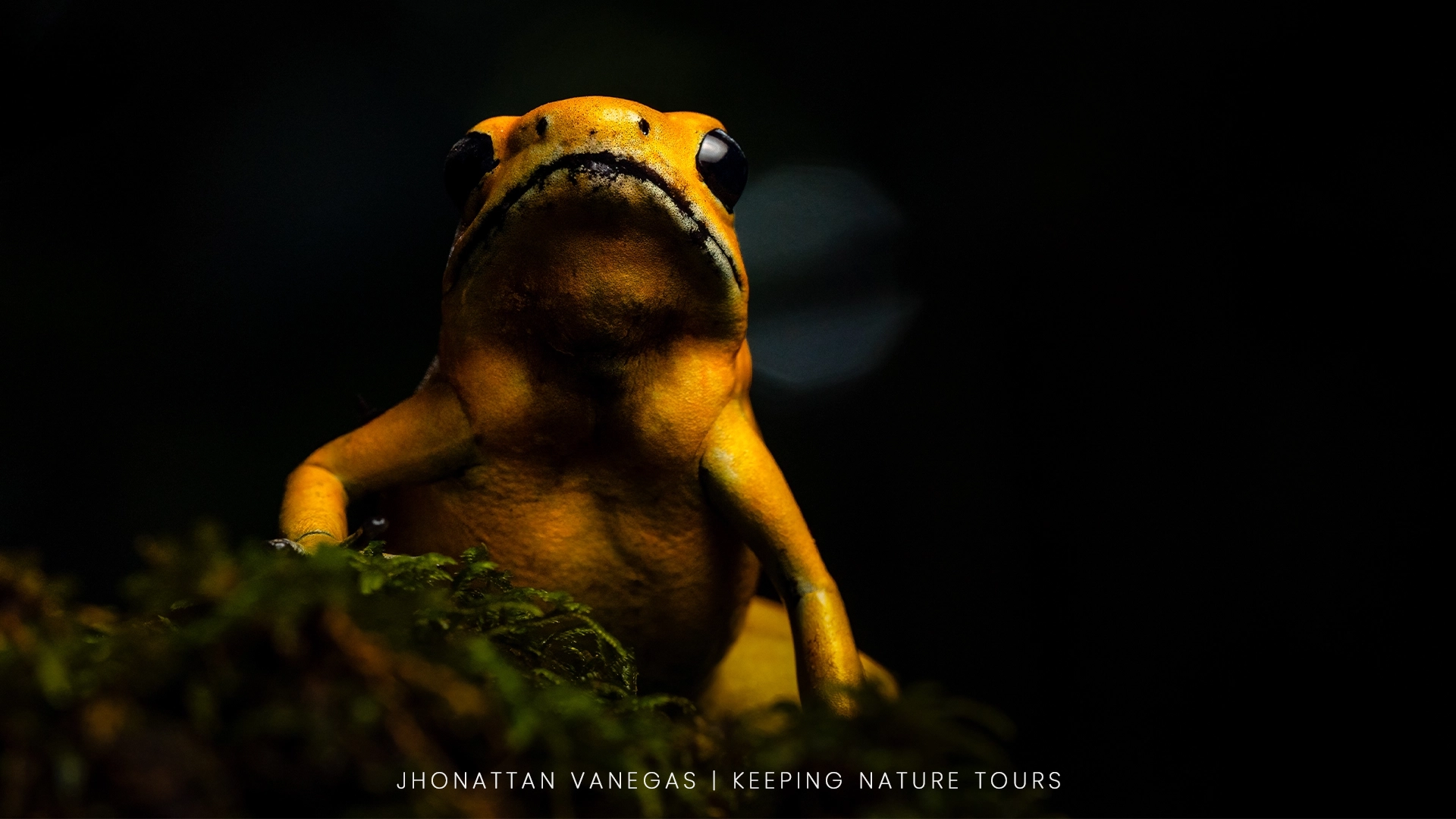
Photograph by Jhonattan Vanegas
Workshop structure
Reproduction ratio and magnification: the 1:1 ratio and beyond, the different scales, and why in macro we do not get closer, we magnify.
How to reach magnification: macro lens, extension tubes, close-up lenses (Raynox), teleconverters and reversed lenses. Manual and selective focus, and minimum focusing distance.
The exposure triangle (ISO, shutter speed, aperture) in macro; depth of field driven by focal length, focusing distance, aperture and background, and the limit set by diffraction.
Reading light at a small scale: quality (soft and hard), quantity, direction, temperature and diffusion. Fill flash and external flash, and how direction and angle change the image.
Light modifiers (diffusers, softbox, snoots), reflection and transmission, flash power in stops, color temperature and white balance, and building practical lighting setups.
How to approach a small living subject with respect, without turning our presence into a disturbance. Live demonstration and a simple path to keep practicing after the workshop.
Why this workshop exists
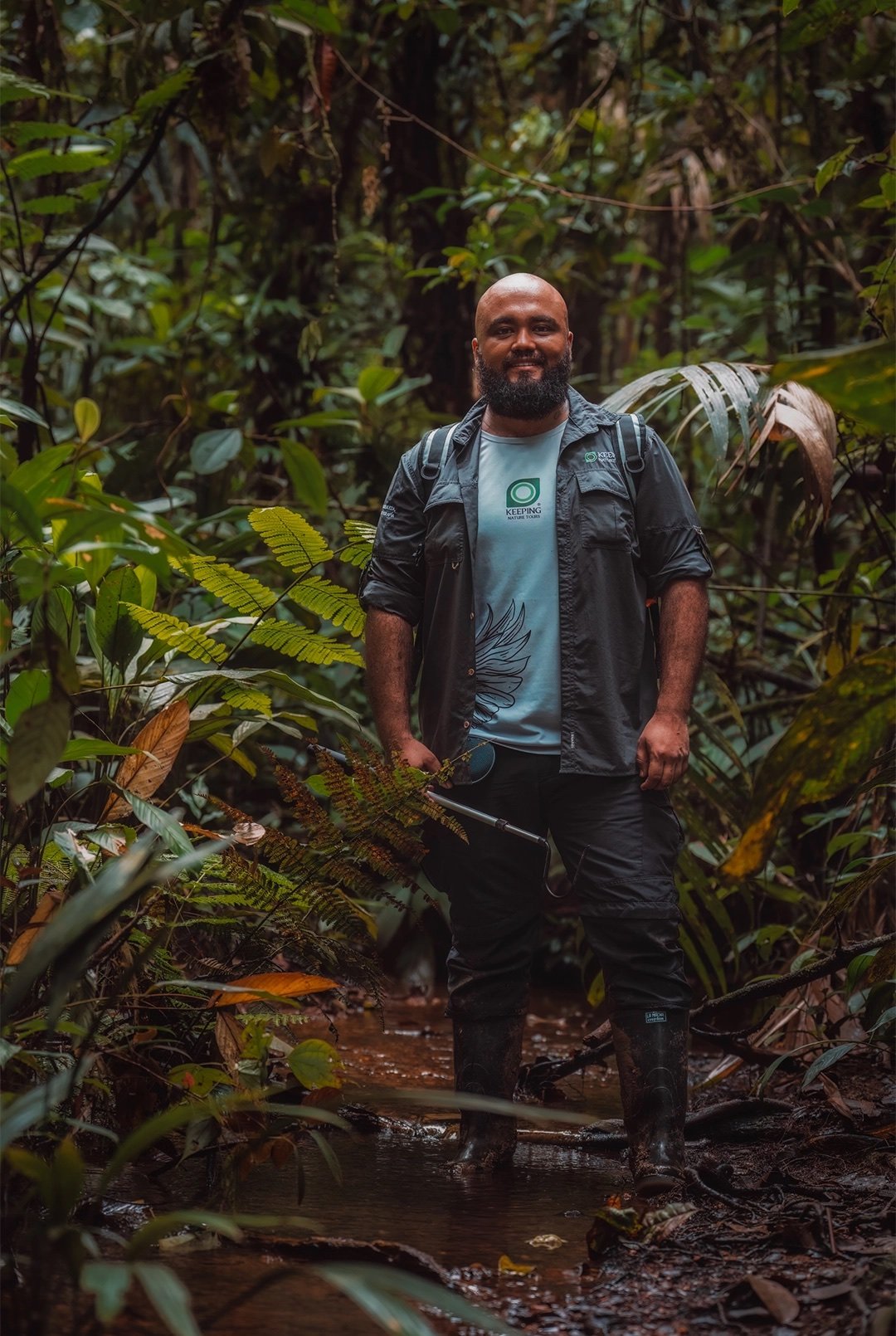
I am a nature photographer, biologist and herpetologist. A large part of my life has been devoted to observing, photographing and sharing what I have learned about the natural world.
After the earthquake that affected different communities in Colombia, I asked myself what I could contribute from what I know how to do. The answer was simple: to teach.
That is why I decided to create this special edition of my macro photography workshop. I want to spend four hours sharing the knowledge I have built behind the camera and turn that gathering into something that can reach far beyond us.
You come to learn photography. I bring my knowledge and my work. And the profit the workshop generates becomes help for families who need it today.
Jhonattan VanegasBiologist · Herpetologist · Nature photographer
The purpose
100% of my profit, after taxes and the costs of running the workshop, will go directly to support affected families.
I will make the delivery in person and afterward I will share a record of the process so that everyone who took part can see how the help was used.
I do not want the situation of these communities to be used as a visual or emotional device to sell the workshop. That is why this page will keep speaking from photography, knowledge and the chance to build something useful among those of us who decide to take part.
Transparency
Your registration is for a four-hour live educational experience. You are not making a donation or purchasing a donation certificate.
From the price of each registration we only deduct taxes and the costs needed to run the workshop, such as the fees associated with payment processing. Everything left over as profit will go to the families.
After running the workshop and delivering the help, I will publish a record of the process and the amount given to the communities. Transparency is also part of this initiative.
Another way to take part
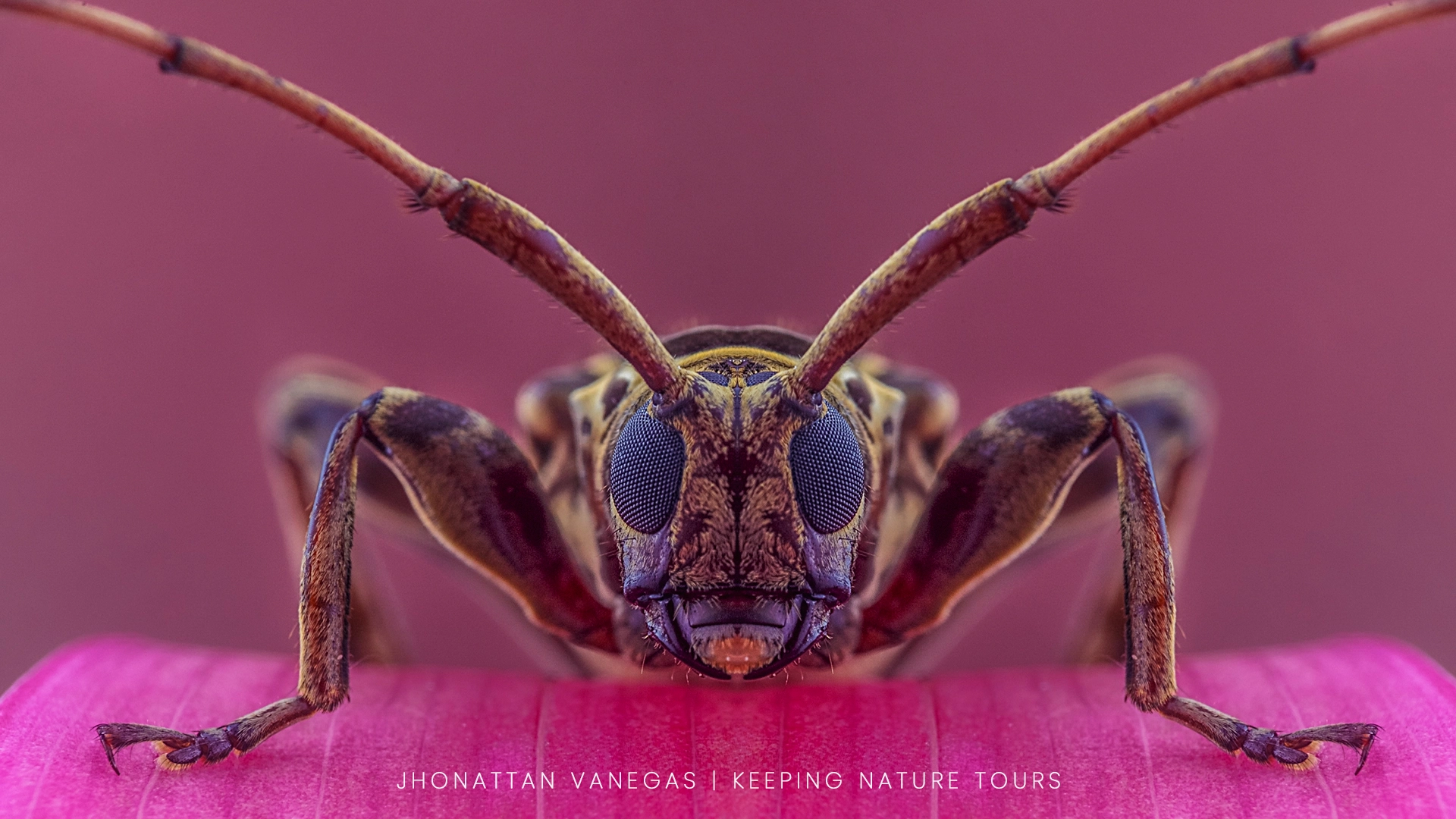
If you cannot attend the workshop and would like to support this initiative, some of my photographs are available as prints in the store.
You can bring a nature image into your space and, at the same time, be part of this purpose.
Workshop information
Frequently asked questions
Reserve your spot
Macro photography begins when we discover that what seemed small can hold an entire world.
We will spend four hours learning to photograph it with more intention, more knowledge and more respect.
And this time, on top of that, what we learn together can become help for someone else.
September 5, 2026 · Google Meet · 4 hours · 20 spots
Cannot attend? You can also view my fine art prints and be part of this initiative.