Field Chronicles & Conservation Stories
Conservation, the Aftermath of a People in Conflict
There are forests in Colombia that stayed wild for the worst possible reason. For more than fifty years, an armed conflict made whole regions of this country impossible to enter. No roads were cut, no cattle moved in, no mining licenses were filed, because no one could get there and come back safely. And so, in a cruel and unasked-for way, some of the most biologically rich places on Earth were left alone.
That paradox is the reason this project exists. I called it Conservation, the Aftermath of a People in Conflict, and its purpose was simple to say and hard to do: to go into the zones most marked by the war and photograph, one by one, the living things that were still there. Not to romanticize any of it. The same conflict that kept those forests unreachable also left its own scar on the land, in the deforestation opened for coca, in the fumigation with chemicals like glyphosate, and in the antipersonnel mines. I wanted to hold both truths in the same frame, because both are true.
Colombia is the second most biodiverse country in the world, and it holds that extraordinary share of the planet's living richness on just 0.77 percent of the world's continental surface. When you carry a camera into that, you stop thinking about your gear. You start thinking about how little of this most people will ever get to see, and how easily it could be gone before they do.
I went where the conflict had been heaviest, into forests that most of the country had learned to imagine only as danger. Each of these places asks something different of you, and each one gave back something I did not expect.
The expedition I return to most in my memory was Munchique, in Cauca. Parque Nacional Natural Munchique, in the municipality of El Tambo, protects around 44,000 hectares (the current management plan cites close to 47,000) and is one of the protected areas with the highest diversity in the country. It was there, in 2016, working alongside Luis Vera-Perez and Martha Silva, that we rediscovered two glass frogs, two of the emblems of Colombian biodiversity.
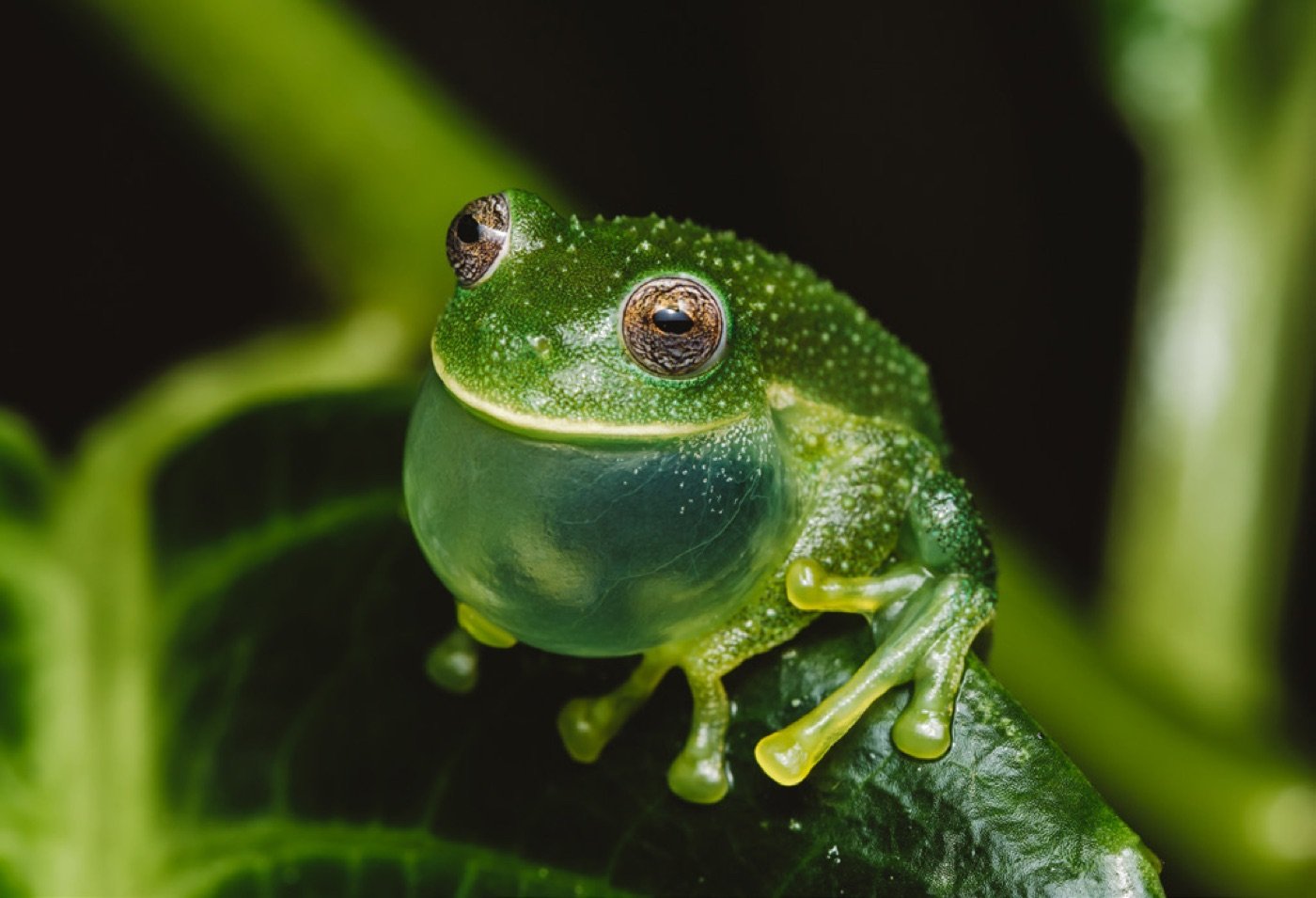
A glass frog is exactly what it sounds like. Turn one over and you can see its heart beating through the skin of its belly. They are small, and they are easy to miss, and finding one that had not been recorded in that place for years is the kind of quiet that stays with you longer than any loud thing ever has. The two we found were Nymphargus balionotus (described by Duellman in 1981, and long known by the older name Cochranella balionota) and Nymphargus luteopunctatus. Their conservation status is not a footnote. Nymphargus balionotus is classified by the IUCN as threatened (Vulnerable), and Nymphargus luteopunctatus is listed as Endangered. These are not abundant animals we stumbled onto. They are rare lives holding on in a narrow band of forest.
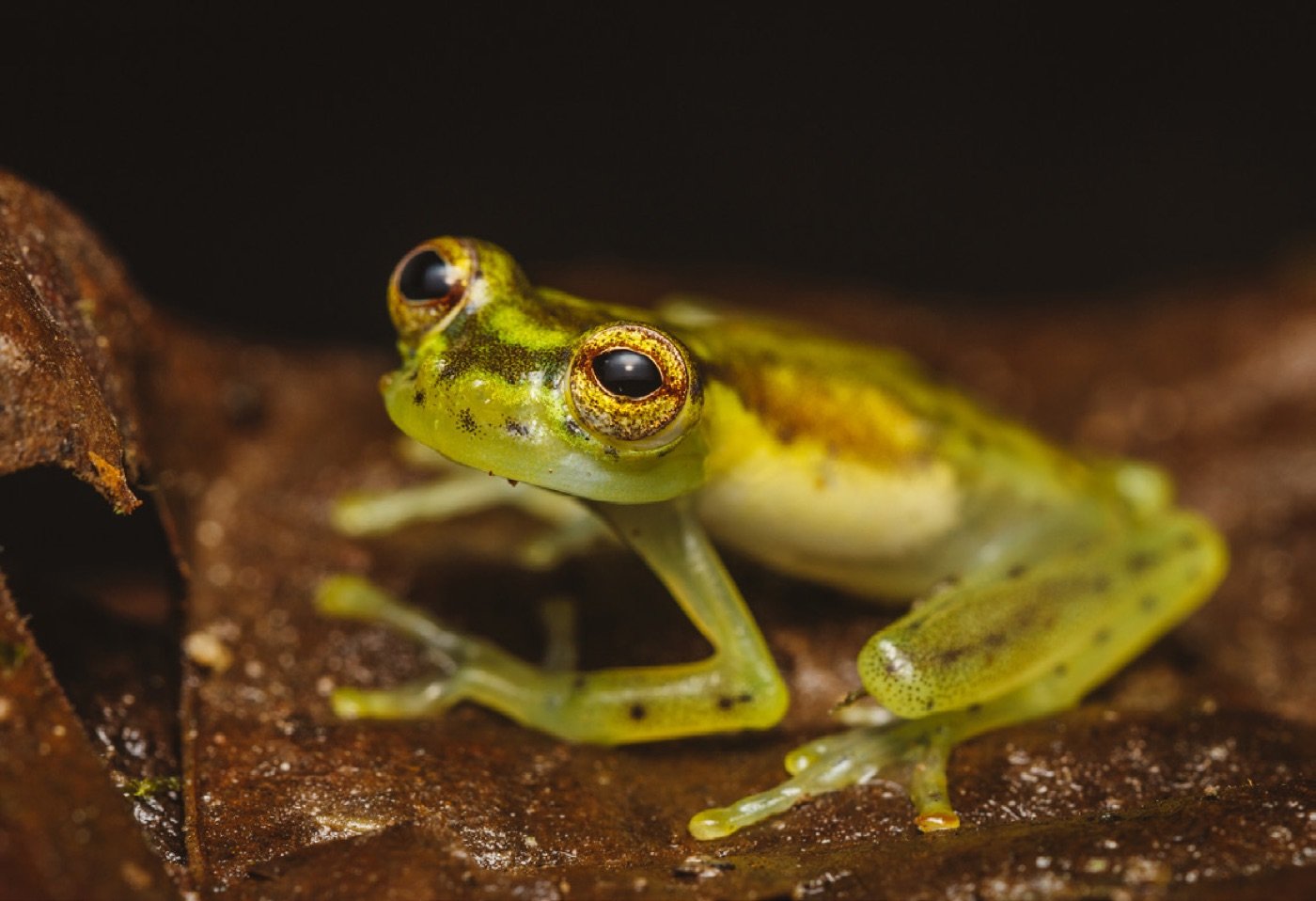
Some of the animals of these territories carry the conflict in their very names. High in the Andean forest lives a small harlequin toad, Atelopus farci, described by the herpetologist John Lynch in 1993. Lynch evoked the guerrilla in the name itself, a toad hidden and camouflaged in the forest, in territories that the war, for all its horror, had indirectly shielded from the outside world. And there is a poison frog, Andinobates victimatus, described in 2017, whose name was dedicated to the human victims of the armed conflict in Uraba, in Antioquia. I do not point to these names to make the work sound important. I point to them because when a war writes itself into the scientific record of a country's living things, the animals stop being only animals. They become witnesses.
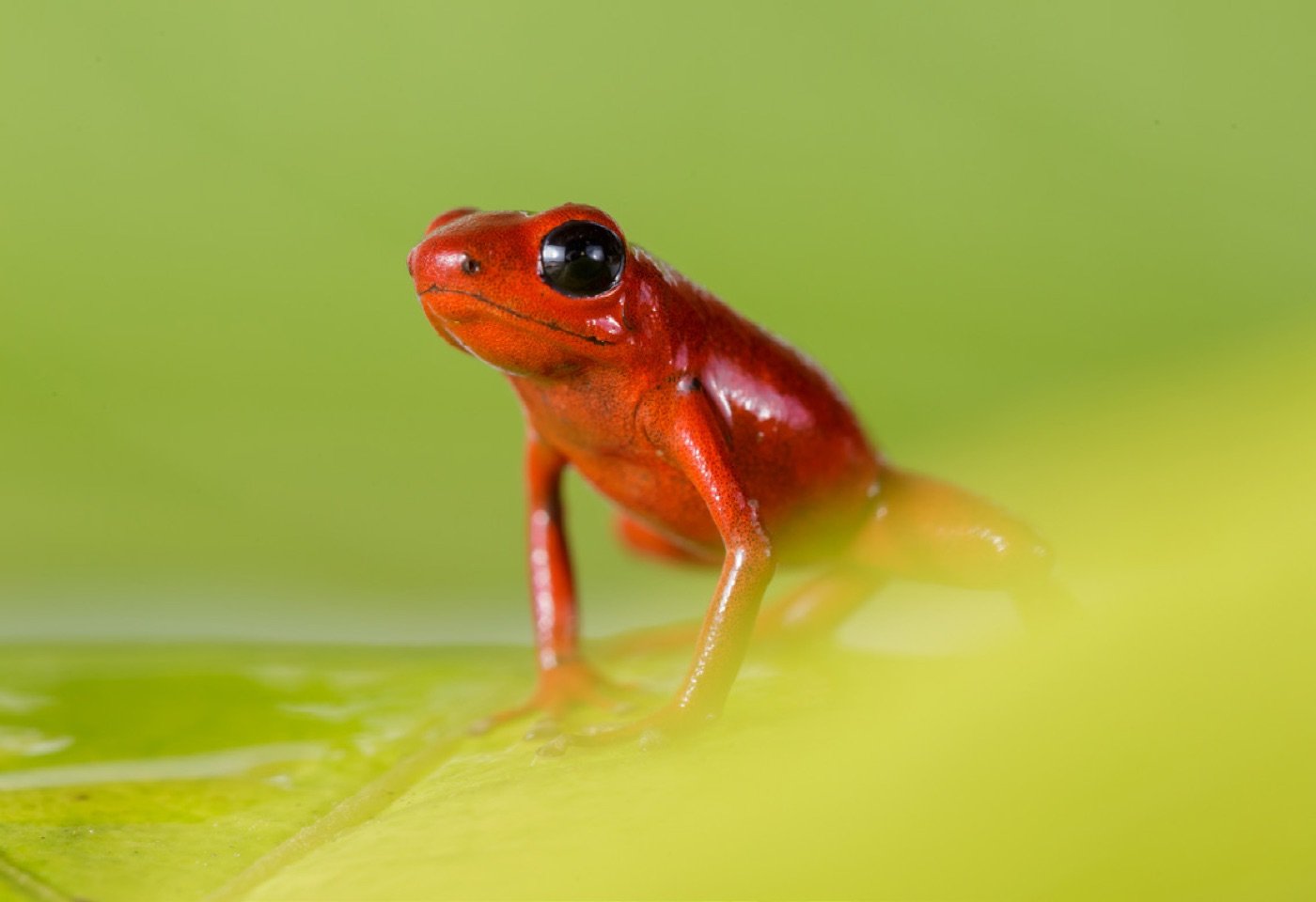
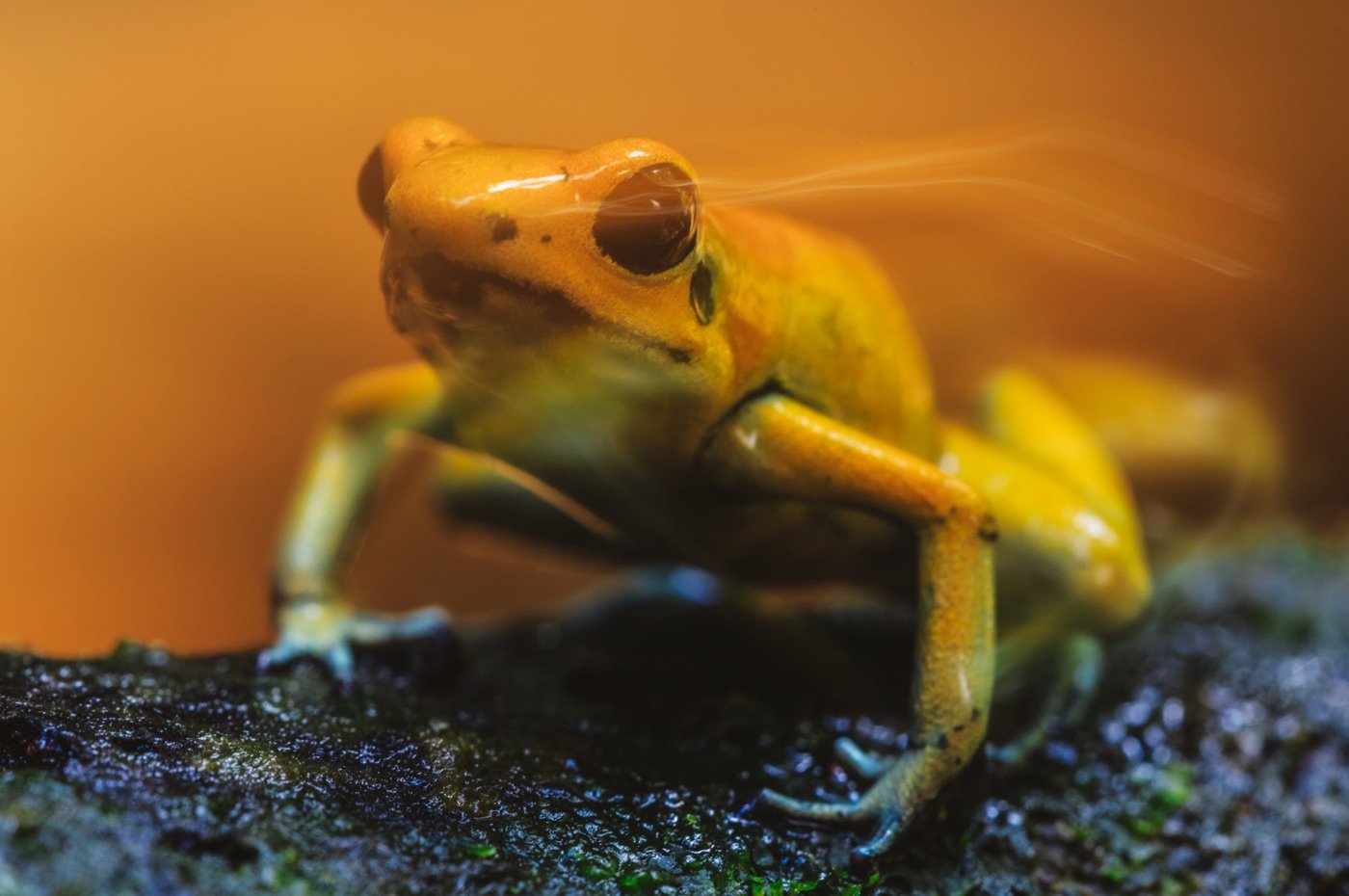
The poison frog I actually photographed for this project was Andinobates bombetes, a tiny, brilliant animal from the forests of southwestern Colombia, in Cauca and Valle del Cauca, listed by the IUCN as Vulnerable. Farther south, in the Amazon foothills of Putumayo, an emerald tree boa (Corallus batesii) sat coiled in the dark. And on the Pacific side of Cauca I met Phyllobates terribilis, the golden poison frog, the most toxic vertebrate known to science. It carries batrachotoxin in its skin, not to inject but simply to be, a defense so absolute that almost nothing can touch it. It too is now Endangered. I photographed geckos, snakes, salamanders and frogs whose names most people will never need to know. That is the point. You cannot protect what you have never seen. My whole reason for making these images is to carry that first sight to someone who will never stand in that forest, and to make them care enough to want it to stay.
Here is the hard part, and I will not soften it. Peace, when it comes, opens these forests to the very things that were kept out. The real drivers of biodiversity loss in this country are not mysterious: habitat destruction and fragmentation, overexploitation, and introduced species. The forests that the conflict accidentally protected are now the forests most exposed. That is not an argument for war. It is an argument for doing on purpose, and well, what the conflict did by accident and by force: leaving these places, and the extraordinary lives inside them, the room to keep existing.
That is what this project was, and it is what my work has been ever since. You protect what you love, and you love what you have truly seen. My job is to help you see.
This project was published as the Invited Project (Proyecto Invitado) in Revista Enfoque Visual, in the October to December 2017 issue (pages 40 to 43), with the full essay and the photographs from the expeditions. It remains one of the projects I am most proud of, because it tried to tell the truth about a beautiful and painful thing at the same time.