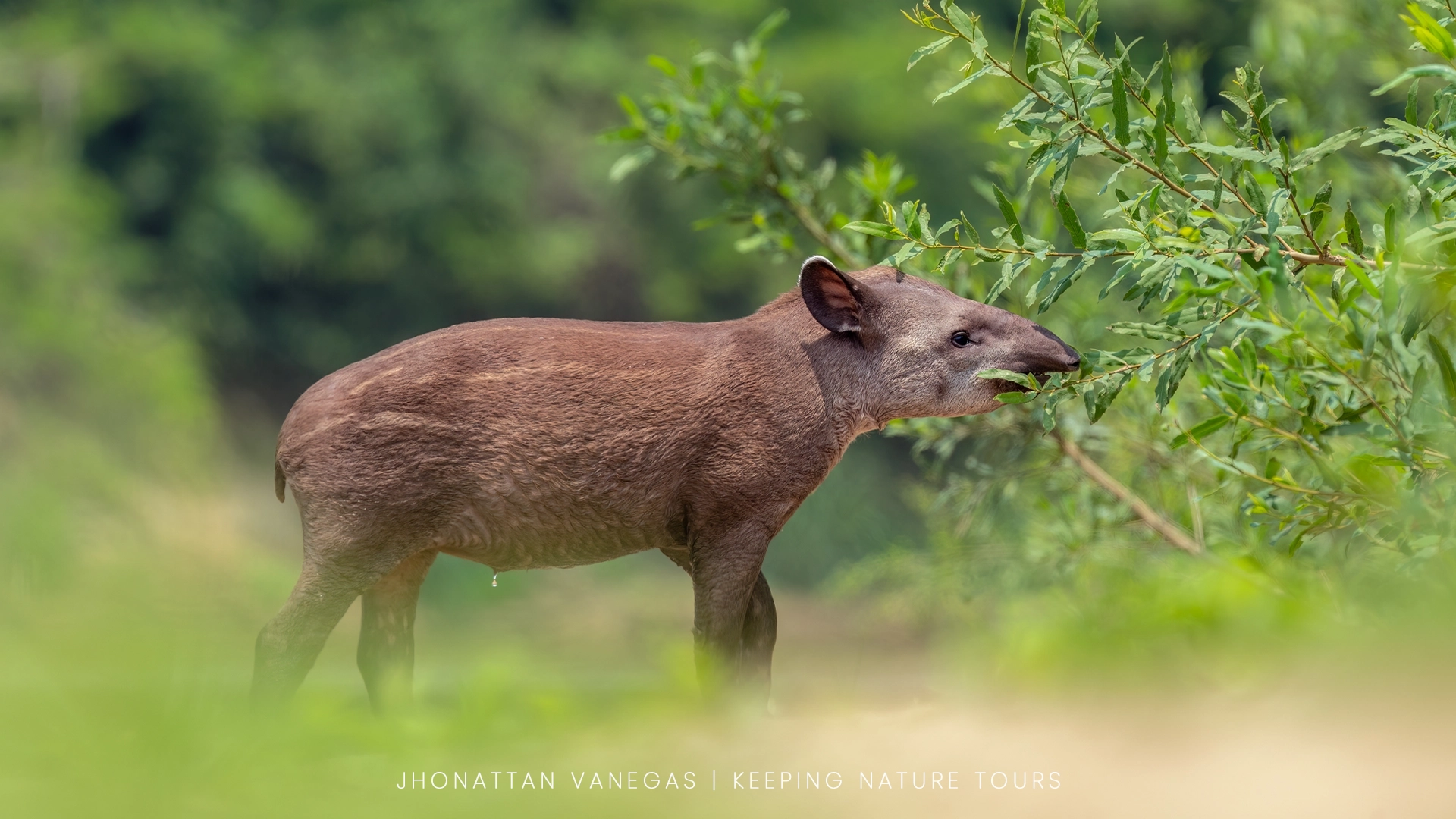
Essays and Reflections
The Nature We Never Left
There is a story we tell without noticing we are telling it: that humans are one thing and nature is another. We speak of going out into nature, of getting back to it, as if it were a place we could leave. I have spent my life as a biologist and a photographer inside that supposed other world, in the forests, rivers and mountains of Colombia, and the longer I work there the less I believe the line between us and it is real. The separation is not a fact of biology. It is an idea with a history, and like any idea it was authored, argued over, and could have gone another way.
The intuition that we stand above nature is old. Aristotle ranked living things on a ladder with us at the top, and medieval thought stretched that ladder into a Great Chain of Being. The Renaissance and the Enlightenment did not invent the hierarchy, they secularized it and handed it the tools of science. By 1637 Descartes could describe animals as machines, mere automata without real feeling. If a dog is a clock, the line between us and the rest of life stops being a line and becomes a wall.
Some of that wall was built with scripture. In 1967 the historian Lynn White Jr. argued in the journal Science that Western Christianity was the most human-centered religion the world had seen, and that reading Genesis as a command to subdue the earth helped set up our ecological crisis. It is worth saying that White was himself a Christian, and that his proposed cure was also Christian: he wanted to make Saint Francis of Assisi the patron saint of ecologists. Other scholars pushed back hard, and the same verses read, to many, as a call to stewardship and care rather than conquest. I am not here to settle that argument. The point is smaller and stranger: the separation was written down, debated, believed. It is a worldview, not a law of nature.
And it is not even a universal worldview. Many Indigenous cosmologies never placed humans outside nature to begin with, which is exactly why anthropologists treat the Western divide between nature and culture as one way of seeing among several, not the default setting of the human mind. When I work in Colombia I am often standing on land held by people whose languages never needed a word for the wilderness out there, because there was no in here to separate it from.
Modern life took this inherited idea and made it a daily experience. For the first time in history most of us are city people. The UN estimated that 55 percent of humanity lived in urban areas in 2018, and that the figure will reach about 68 percent by 2050. A great deal of what we now know about a jaguar or a glass frog arrives through a screen. The naturalist Robert Pyle called this the extinction of experience: it is not that the species vanish first, it is that our daily contact with them vanishes, so we notice less, care less, and protect less, which erases still more contact. It feeds on itself.
So we try to buy the contact back. There is now an entire industry of reconnection, and I want to look at it honestly, because I believe in being outside and I still do not want to lie to you about what the science says.
Forest bathing is younger than it sounds. The word shinrin-yoku was coined in 1982 by the head of Japan's Forestry Agency, partly to give people a reason to protect the country's forests. The research that grew around it is real but modest: small studies show lower cortisol and lower blood pressure after time among trees, and a shift toward the body's rest-and-digest state. That is worth something. It is not yet a cure for anything, and the studies that suggest a forest walk arms your immune system against cancer are suggestive, not proof.
Earthing is shakier still. The idea that touching bare ground heals us by passing electrons into the body has thin evidence, much of it produced by people who sell earthing products, and no good physics requires the electrons at all. Standing barefoot on wet grass may well feel good. If it does, the reasons are ordinary: you are outside, you are still, you are calm. We keep inventing new mysteries to license an old and simple pleasure.
Cold exposure has the most theatrical claims and the most cautious science. In controlled trials, trained practitioners really could dampen their own inflammatory response on command, which is genuinely surprising. But a 2024 review found the overall quality of the research very low, the effects mostly short-lived, and the studies small. And cold water can kill you if you are careless. The body responds to cold. That is not the same as cold being medicine.
There is even a name for the pull we feel toward living things: biophilia. The word came from the psychoanalyst Erich Fromm in 1973, and the biologist E.O. Wilson gave it an evolutionary reading in 1984. It remains a hypothesis, not a proven law. What the evidence does show is narrower and still meaningful: time in nature reliably lifts mood and lowers the weight of negative emotion. The love is real even if we cannot yet prove it is written in our genes.
Here is what I keep coming back to, and it is the part the reconnection industry misses. Biology has a name for what we do to the world: niche construction. Beavers build dams, earthworms remake the soil, and the first photosynthesizers filled the sky with oxygen and changed the planet forever. Organisms do not just adapt to their environment, they build it, and the built environment is inherited by whatever comes next. Seen this way, a city is a human reef. Our concrete and our code are not an exit from nature. They are the most recent thing nature has learned to do through us.
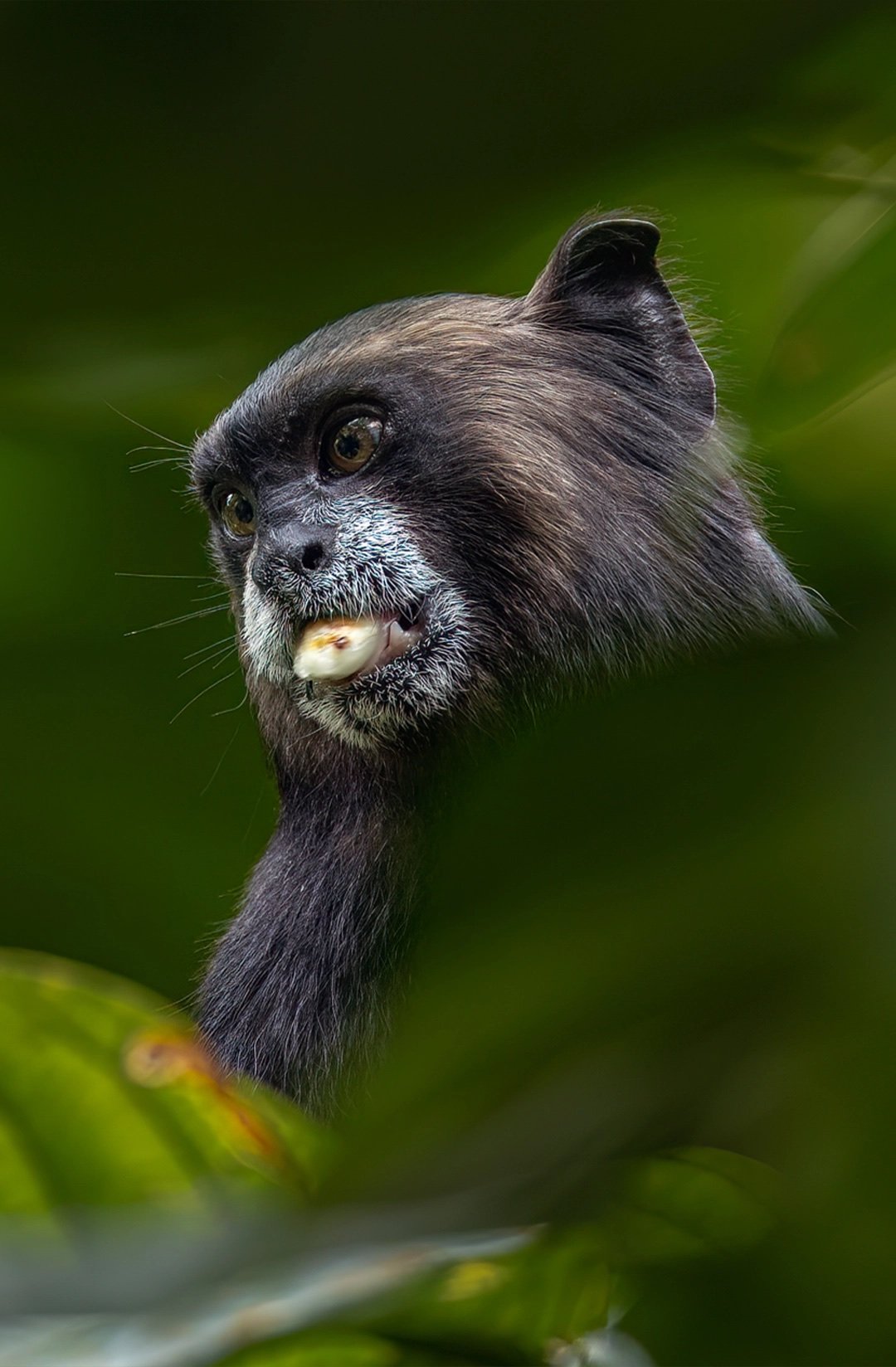
Which brings me to the uncomfortable part. Many of the movements that promise to reconnect us end up smuggling in a quiet sense of superiority, the feeling that those who forest-bathe and walk barefoot and plunge into cold water are somehow more awake, more moral, closer to the truth, than everyone still stuck indoors. That is the same old separation wearing new clothes. Inventing electron-transfer physics to justify standing on grass is not a return to nature. It is one more way of insisting that nature is a special place you have to travel to, and that reaching it makes you better.
But you do not have to travel to it. You have never once been outside it. The frog I photograph and the hand that holds the camera are the same evolutionary process looking at itself. Maybe the real challenge is not to go back to nature, but to understand that we never left, not even in the most technological and artificial corners of our lives. I make my images for that reason. Not to sell you a doorway into the wild, but to remind you that you were never on the other side of the door.
This essay began as a short reflection I shared online, and it kept growing. I have tried to keep it honest about what we know and what we only wish we knew.